
Itā€™s Not Too Late to Cast Your Voteā€¦For Best 911³Ō¹Ļ Research Images

First place
911³Ō¹Ļ is giving everyone the chance to cast their votes (again), but this time for the best images captured by its researchers in a contest that highlights work from across all of 911³Ō¹Ļā€™s 10 colleges.
The goal of 911³Ō¹Ļā€™s Art of Science photo contest, which is in its second year and comprised of two competitions, is to engage and educate the public in the unique study, scholarship and creative activities taking place in all of the Universityā€™s labs, out in the fields and across all of its disciplines.Ģż
The Peopleā€™s Choice Award invites the public to select its favorite image among more than 30 finalists by votingĀ , with voting open until Nov. 30 at midnight. This is preceded by a contest where 13 judges from across the University chose three winners from more than 150 submissions. The winning photographs, including the 11 honorable mention winners, areĀ , and the top three winning photos can be downloadedĀ .Ģż
This year, Tricia Meredith, Ph.D., assistant research professor in 911³Ō¹Ļā€™s and director of research and principle investigator for the , took first place with her microscopic image of a spiderā€™s spinnerets or silk-spinning organs. The photograph was captured due to a partnership with the Karen Slattery Educational Research Center for Child Development on 911³Ō¹Ļā€™s Boca Raton campus.Ģż
ā€œIā€™m honored that my photograph was selected from so many wonderful images,ā€ Meredith said. ā€œThe lab is meant to be a collaborative research hub that provides mentorship for the students and this image is a great example of how it can help people understand the beauty of the natural world.ā€
Imaging lab technicians scanned the spider in the garden habitat of the voluntary prekindergarten class so the children could discover there is more to the harmless spiny orb-weaver spider than just itsā€™ scary-looking exterior.Ģż
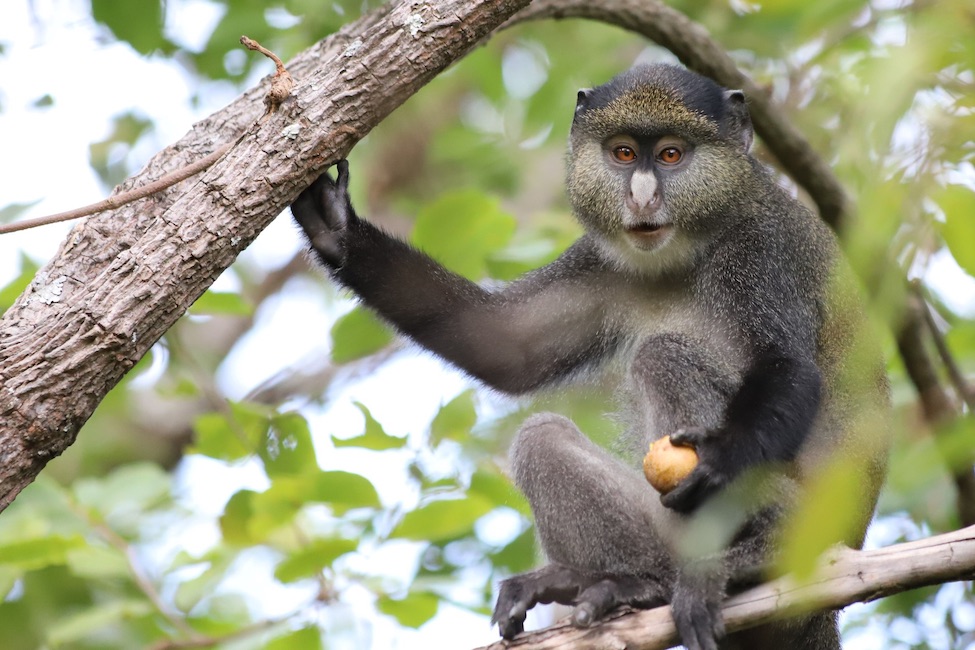
Second place went to Charlene Fournier, a graduate student in the , for her picture of a male hybrid monkey born in a habituated mixed-species group between red-tailed monkeys and blue monkeys. Ongoing hybridization between these two species occurs in Gombe National Park, Tanzania, which provides a natural laboratory to study hybridization in the wild.
Third place belongs to Jasmine Coyle, a research program coordinator at 911³Ō¹Ļā€™s , for her image of butterfly scales using the scanning electron microscope at the 911³Ō¹Ļ High School Imaging Lab.
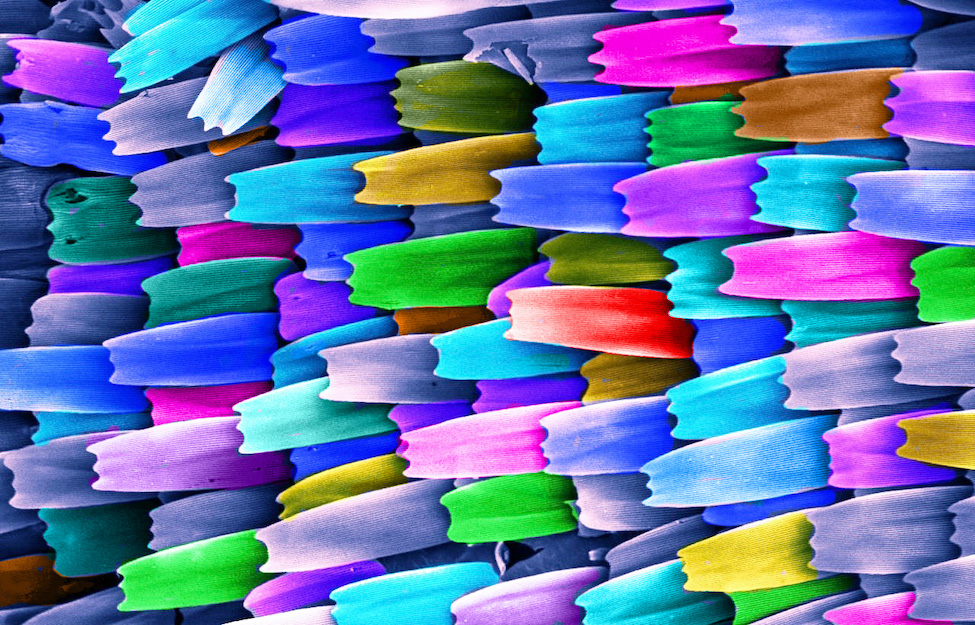
ā€œIt is so beautiful and unique,ā€ said contest judge Gabby Barbarite, Ph.D., director of outreach and engagement for 911³Ō¹Ļā€™s Harbor Branch Oceanographic Institute, about Coyleā€™s butterfly scales image. ā€œI had no idea butterfly scales looked like this, so not only was I surprised, but I learned something new.ā€Ā
-911³Ō¹Ļ-
Tags: research | faculty and staff | science | community | harbor branch | education | students